MathCurvesSurfacesWallpaper GroupsGallerySoftwarePOV-Ray
ProgramingLinuxPerl PythonHTMLCSSJavaScriptPHPJavaLang DesignEmacsUnicode ♥

Maze & Math in Video Games

,
ladybug
The arcade game Lady Bug (1981)

The goal of the lady bug is to go thru the maze and eat up all the dots and other special things Those green walls you can push thru; they act as turnstile gates.

It is quite fascinating to play this. I've been addicted. One key in this game is by pushing the gates and thus changing the shape of the maze, to escape the pursuit. Like, running towards a gate and all of a sudden, flip, and the chasers can't get to you. The chaser bugs run quite much faster than the lady bug, so exploiting the gates is a necessary strategy.

ladybug5
A game in progress. The states of the gates on the left sides are not perturbed. The gates on the right sides are positioned optimally for the ladybug. See that there's a enclosure where the ladybug is at. In order to get to the ladybug, the beetles have to go all the way from the bottom, and enter from the right. So, it makes their approaching very obvious. Once they are near, just go thru the gate and the encroacher will have to go all the way back out to get you.

After you've been playing this game for a while, the math of game starts to get to you. For example, i've played this game on and off for years, and have developed certain gate positions so that it forms enclosures and maximize the path the chasers have to go thru. Once they come, you flip a gate and you are on the other side, and then they have to go all the way back to get you. (but of course, there are 4 of them)

Then, one starts to think about the maze design itself. Because, in this game the maze is always the same, so there's not much variations to think about on the above problem. It would be more interesting, if the maze varies on different levels. Then, i guess one can delve into the problems of optimizing gate states for each maze. And also, ultimately this leads one to think about the designs of the maze itself. i.e. design a maze with these gates so that, it maximizes or minimizes the problem of finding the optimal gate states….

One simple maze design would be to have gates on a regular grid, that is, no fixed walls, and all walls are gates. This actually gets one into other things to think about… since for example, one wants to avoid having the door overlaying on each other… but anyway, if the gates are on a regular grid, than it gives a lot power to the ladybug. Ok, i guess our first principle would be: in general, the more gates, the more easy is the game. Suppose then we have a maze with just a couple of gates…

A lot more to be written about on this topic… basically, i was a teen during the golden age of arcade games (1980s and early 1990s), and today they are all available free. (See: MAME) There's a lot nostalgia. Back then, you have to drop in money to play, and as a teen you don't have much, but as a teen you are rather very much addicted to it. And now, am reaching my 40s, and computers have become hundreds of times speedier, and video games have also grown many directions including artificial intelligence complexity, 3D games, and massively networked universes… but now these old, first-generation video games, thousands of them, are all freely available. They are the simplest games, however, many of them exhibit fascinating problems in math.

In general, the inherent math problems in these simple games are not solved or hardly analyzed in any general way.

This page will grow as i find more time to play old games, do screen shots, comment on the math, or other things.

marble madness
Marble Madness.

To play Marble Madness, you'll need a trackball that spins. see: Best Trackball Mouse.

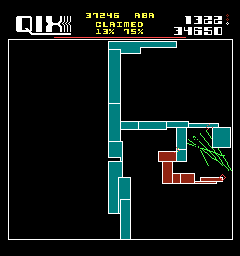
qix
Qix.
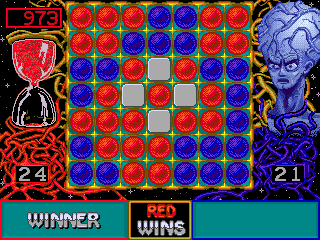
ataxx
Ataxx.

Puzzle/Maze

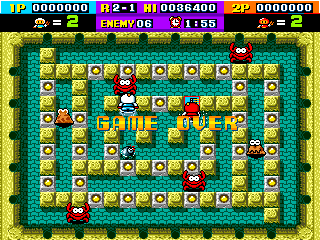
Bomberman
Bomberman.
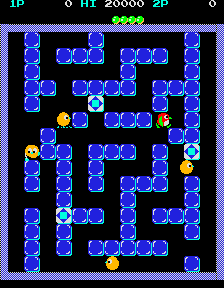
pengo
Pengo (arcade game).
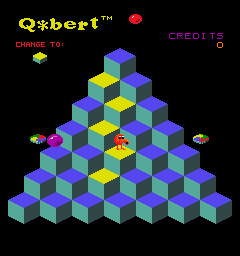
qbert
Q*bert.

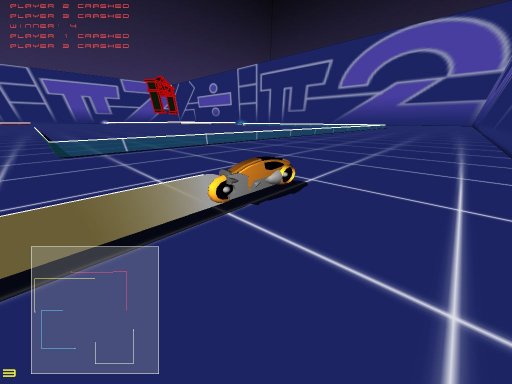
Just discovered 2 great free games, both works for OS X.

GLtron screensot
Screenshot of GLtron.

See also: Tron Light Cycle Optimal Strategy.

More

blog comments powered by Disqus