Xah Talk Show 2026-02-06 Ep758 JavaScript. Array Sort, Peter Norvig, is Python Acceptable Lisp
Video Summary (Generated by AI, Edited by Human.)
- The video focuses on advanced JavaScript coding, specifically demonstrating how to sort objects within an array using the Array.prototype.sort() method (2:07).
- The speaker, Xah Lee, begins by explaining the "idiocy" of JavaScript's default sort behavior (6:08), which converts elements to strings and compares them by their UTF-16 code units, leading to unexpected results for numbers (7:06).
- He then guides viewers through creating a custom comparison function (known as a "predicate" function (11:46)) to correctly sort an array of objects based on a specific property, like age (30:06).
- Throughout the demonstration, Xah Lee also shares his opinions on:
- The naming conventions for sort functions, preferring "predicate" over "callback" (11:46-13:11).
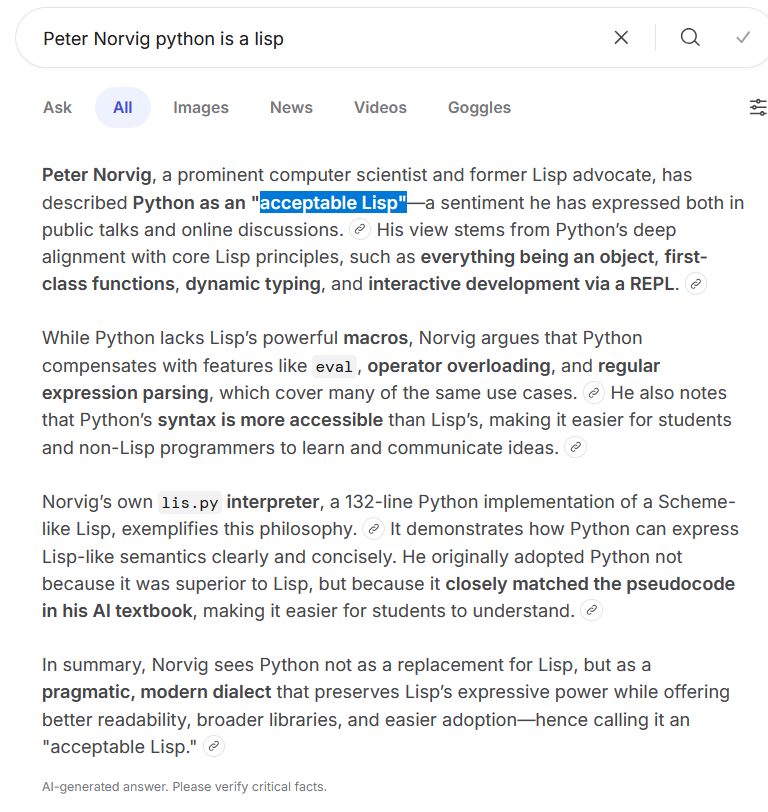
- Whether JavaScript is a "lisp" (14:04) and delves into a historical anecdote about Peter Norvig calling Python an "acceptable lisp" (18:27).
- The characteristics that truly define a lisp (23:18), such as nested syntax, symbols, macros, and predominantly functional programming (26:59).
- He concludes by showcasing the completed code for sorting objects and reiterates the importance of understanding JavaScript's quirky sort behavior (34:10).
// the idiocy of sort in JavaScript
console.log([8, 30, 40].sort());
// [ 30, 40, 8 ]
Peter Norvig on python as acceptable lisp
Characteristics of lisp, you must have
- nested syntax
- symbols
- predominantly functional programing
- lisp macros
- reader macros
some other implicit requirement are:
- Auto memory management (aka garbage collection.)
- Must have builting list or array data type.
Example: Order Objects
// sort objects in array

const xarrayOfObjs = [
 { "name": "John", "age": 40 },
 { "name": "Mary", "age": 19 },
 { "name": "Joe", "age": 15 },
 { "name": "Dave", "age": 54 },
];

// the classic way to name sort function is predicate
const fSortPredicate = (aa, bb) => {
 if (aa.age < bb.age) return -1;
 if (aa.age === bb.age) return 0;
 if (aa.age > bb.age) return 1;
};

// the zoomer idiots, would say fSortCallBackFunction

// sort it
console.log(xarrayOfObjs.sort(fSortPredicate));
/*
[
  { name: "Joe", age: 15 },
  { name: "Mary", age: 19 },
  { name: "John", age: 40 },
  { name: "Dave", age: 54 }
]
*/