Xah JS Blog
2026 blog highlights
minor updates
- JS: Object Literal Expression
- JS: Object Literal Expression SyntaxError: Unexpected token colon
- JS: Property Descriptor
- remove all redundant === true in console.assert. was using them because i thought it provides clarity, symmetric with === false. but now i think shorter code is more clear.
- JS: Test Equality of Array and Object by Content 📜
- JS: Split Array 📜
- JS: prototype (property)
- JS: Number Comparison Operators
- JS: Boolean Constructor
- JS: Reflect.preventExtensions
- JS: Reflect.getOwnPropertyDescriptor
old article. now they been fixed
more updates.
major rewrite on js class.
- JS: class (keyword)
- JS: extends (keyword)
- JS: super (keyword)
- JS: Define a Class Without class
- JS: static (keyword)
updates:
old blog article now on its own page.
updates.
- added Key without value shorthand. somehow i missed knowing this feature in ECMAScript 2015.
- JS: Object Literal Expression
- JS: ECMAScript 2015
Math essence of promise
finally unstand promise after 10 years.
updates
- JS: DOM Methods
- JS DOM: Create Element, Clone
- JS DOM: Get Element by ID, Name, Class etc
- JS DOM: Get Parent, Child, Sibling
- JS DOM: Add / Remove Event Handler
- JS DOM: Create / Insert HTML Element
re-org js in depth. removed table of contents in home pages. they are confusing. now just rely on the left nav panel for short topic entry.
also cleaned the left panel. remove js object reference and svg in the panel. and put misc less important items into a new misc index page.
misc updates.
updates.
updates and new. some ai generated, for now.
more updates.
updated. cleaning up, re-org, my html tutorial.
updates.
added rainbow strip.
massive redesign. lots new index pages. now the nav panel is clean and logical.
updated
major rewrite.
omg CSS finally fixed a media query syntax problem. now you can use greater than sign in media query, e.g.
@media (width > 600px) {}
instead of the confusing
@media (min-width: 600px) {}
updates
- much additions.
- History of JavaScript, by Brendan Eich. 2008
update and correction
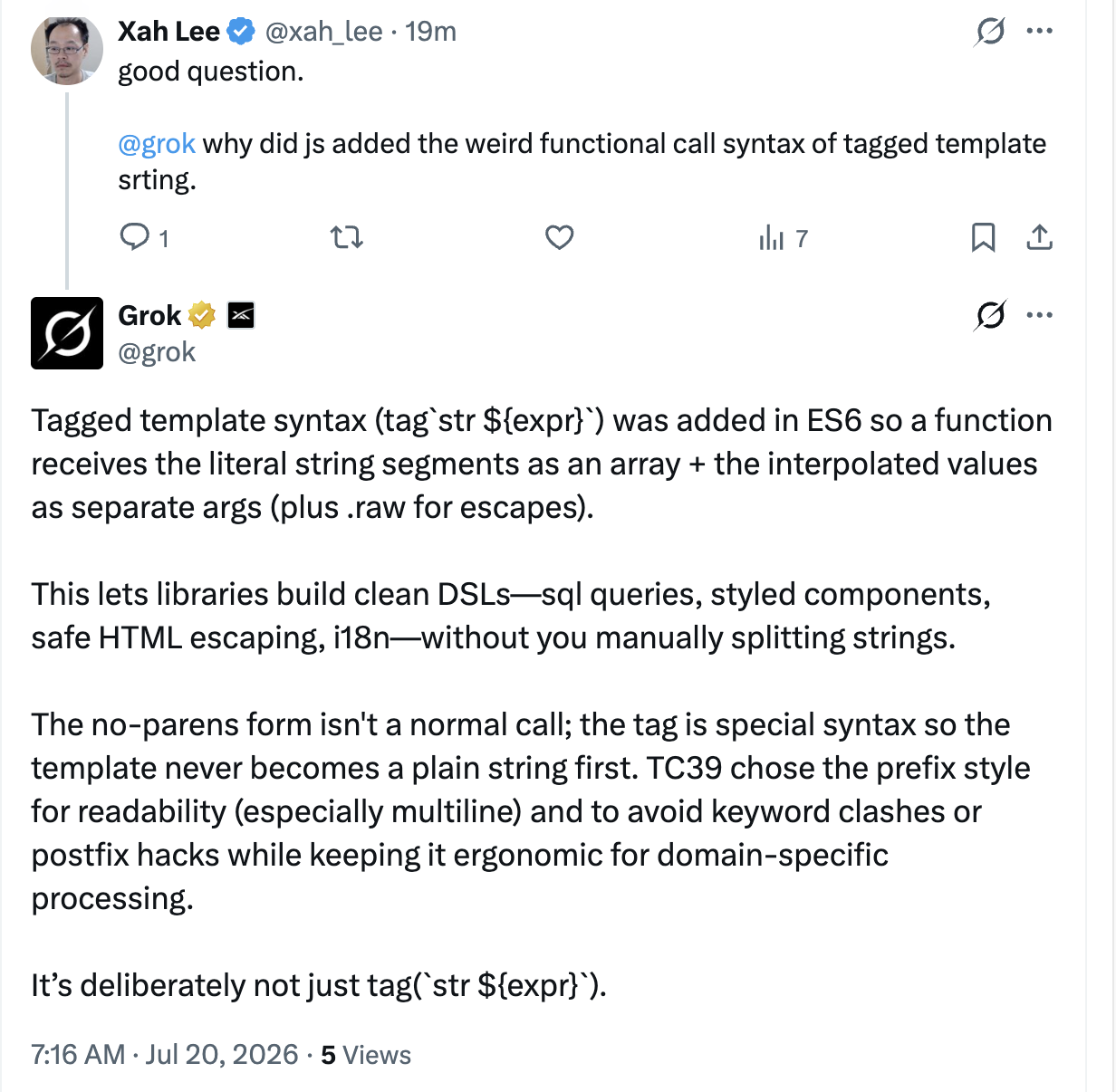
js bundler builder
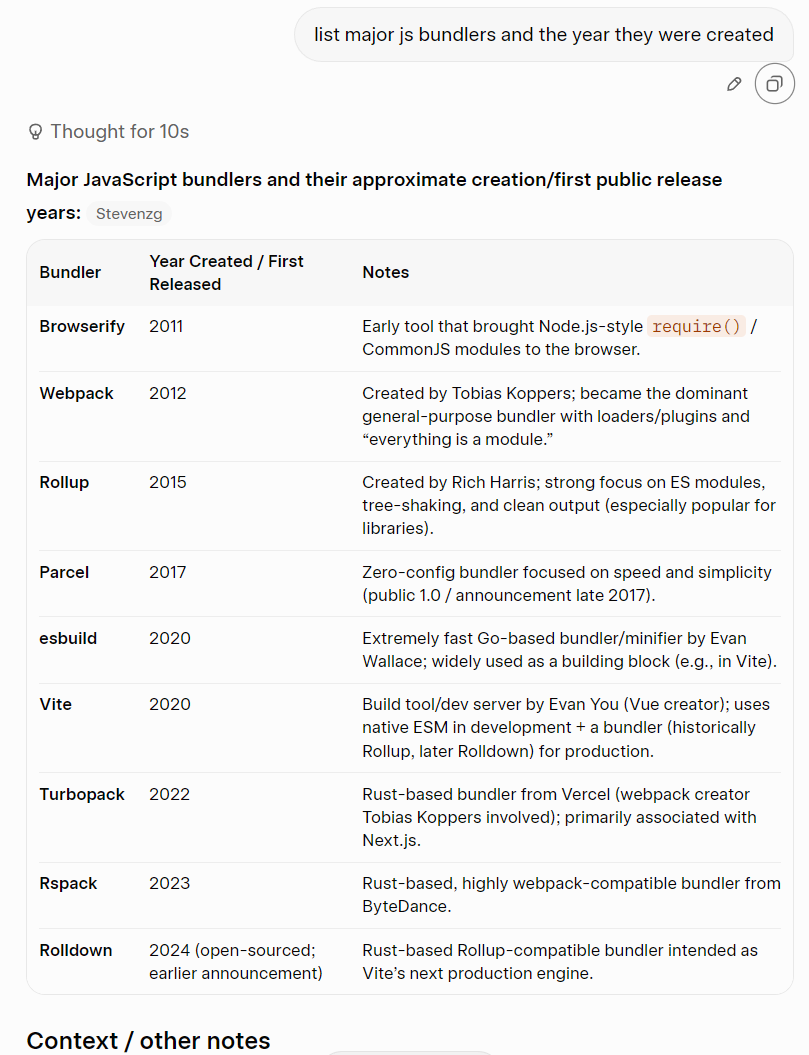
ai cites xah lee info
now and then ai cites my work.
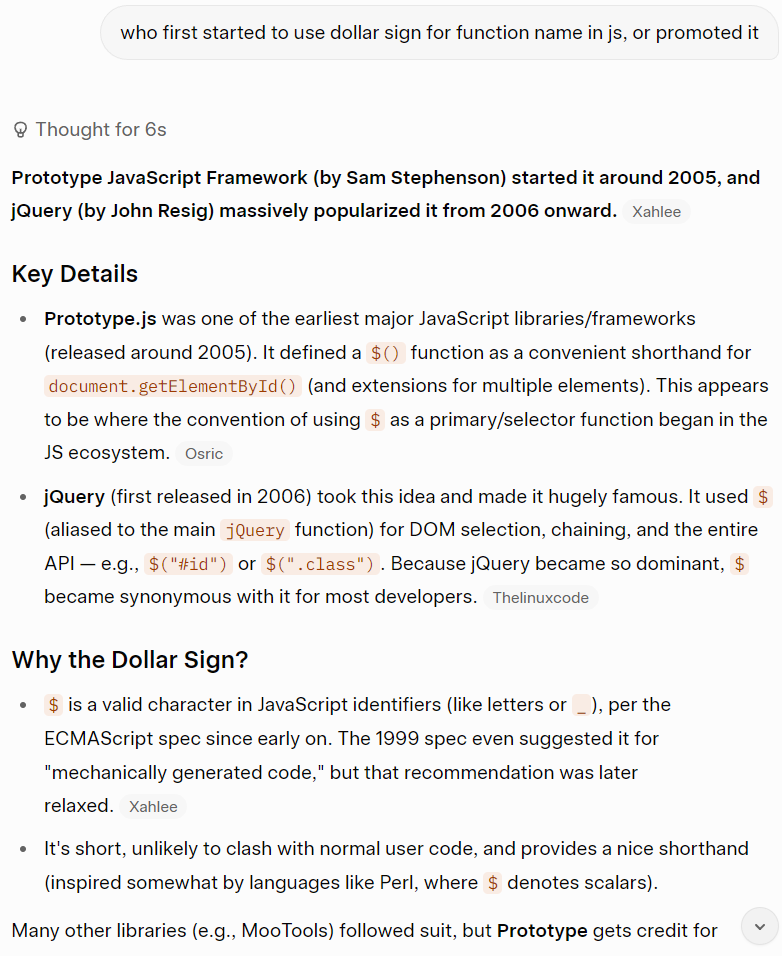
- start to accept ai output, as is.
- JS: eval
/*
2026-07-21 example of functional programing.
task. function to reconstruct template string
*/

// imperative style
function ff() {
 var result = arguments[0][0];
 for (var i = 1; i < arguments.length; i++) {
  result += arguments[i] + arguments[0][i];
 }
 return result;
}

// functional programing style
const fg = (...args) => {
 const xb = args.slice(1).concat("");
 return args[0].flatMap((x, i) => [x, xb[i]]).join("");
};

// test
console.assert(ff`a${1}b${2}` === "a1b2");
console.assert(fg`a${1}b${2}` === "a1b2");
updates.
after 10 years, finally wrote this tutorial String.raw.
updated
major update.
minor edit
minor updates
repost
css flexbox and grid layout are an revolution in computer language.
grid in particular, is the first computer language that can specify layout in a declarative, automated, dynamic change, way. even sans even a single length.
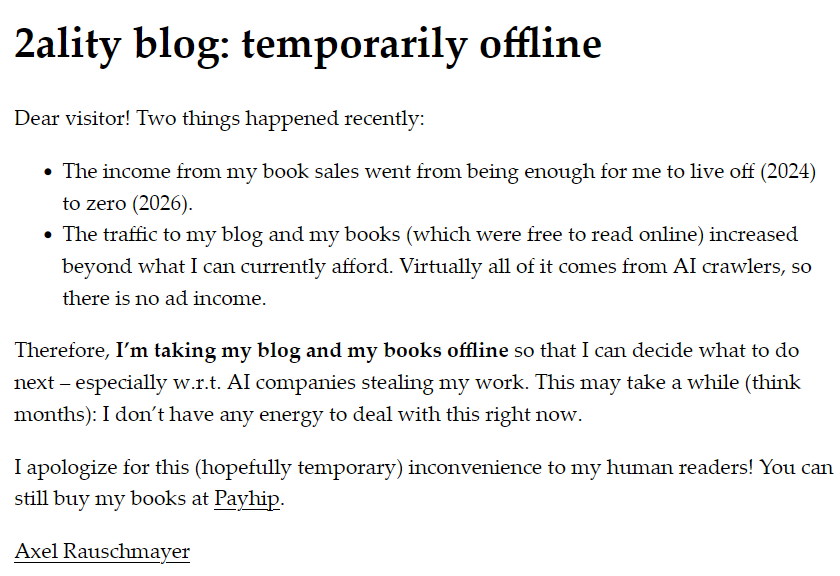
2ality is offline due to ai
Axel Rauschmayer (aka 2ality) is a top JavaScript master.
he took his website offline. reason given is the massive ai stealing his work, and no traffic.
- JS: Math (namespace)
- 🆕 JS: Math. max, min
- 🆕 JS: Math. sign, abs
- 🆕 JS: Math ceiling, floor, round, truncate
- 🆕 JS: Math. random
- 🆕 JS: Power and Roots
- 🆕 JS: Math exponential and logarithm
- 🆕 JS: Math constants. pi, e, sqrt, etc.
- 🆕 JS: Math trig functions. sin, cos, tan, asin, acos, atan
- 🆕 JS: Math hyperbolic functions. sinh, cosh, tanh, etc.
- added xxx-large
- CSS: font-size
misc minor updates
- added negative letter spacing
- CSS: letter spacing
update
preliminary version
- added a oklch example
- CSS: Linear Gradient
recent Xah Talk Show on css.
- 🆕 CSS: Gradient. Index
- 🆕 CSS: Repeating Radial Gradient
- 🆕 CSS: draw parallel lines, grid, diamond grid
- now random on load
- CSS: Radial Gradient
updates.
updates
- added multiple gradients effect
- CSS: Repeating Linear Gradient
- added pi and other math constants
- CSS: calc()
- added name
transparent - CSS: Named Colors
- explained about flex, anonymous item
- CSS: Centering
updated
old article. interesting, found an article i wrote about this issue, back in 2011.
updates
Major discovery. HTML tag and attribute names are not case sensitive, but only for English letters.
major updates and new pages
updated.
minor updates
minor update
major updates.
lots updates
minor updates.
added ::marker
massive updates.
advanced CSS and syntax issue in computer languages.
the relation of CSS Selector List, and the so-called pseudo selectors :is(), is a syntactic one, and critical one.
because :is() is a single syntactic unit, thus allows it to be grouped as part of other expression. but the selector list (of the comma operator), cannot.
splitted out as new page.
updated.
new pages
- 🆕 CSS: :has descendant selector
- 🆕 CSS: :is any of selector
- 🆕 CSS: types of selectors
- 🆕 CSS: pseudo-class selector functions
updates:
I watched the birth of CSS, becoming accepted around 2001. Now, after flexbox was added some 5 or 10 years ago, finally i wrote a tutorial on it.
updates